elliot lovitt product design ← back home

class projects

A walk through what I’ve made across the Product Design curriculum at Stanford, from foam-core automata to full brand identities. Tap any project to peek inside.

Design 121 Introduction to Human Values in Design
Field research: five conversations, real kitchens

Zafar Khan

Dairy farmer and former Engro Foods board member, Pakistan.

Alejandro Morgan

Executive chef at Wildseed and Rad Radish, two vegan restaurants in San Francisco.

Rema Thakar

Software engineer, 54, grew up in India, our mainstream user.

Cooking together

An empathy exercise in a South Asian home kitchen, cooking with Forager side by side.

Insight one

Plant-based dairy was built for a splash in coffee, not the gallon for marinating lamb. Cooks who needed that gallon recognized it instantly.

Insight two

People from dairy-heavy food traditions don’t avoid plant-based dairy because they don’t know about it. They avoid it because they don’t trust it to work in their own kitchen.

“Does it actually behave like dahi in a curry? Does it whiten tea? Does it fill up a kid?”

Zafar Khan, Pakistani dairy farmer
The opportunity

How might we support the non-Western home cook to trust that plant-based dairy can do what real dairy does, in the dishes they already make?

Who we designed for

The Reluctant Experimenter

Home cooks from dairy-reliant traditions, where dairy is functional: marinades, curries, dips, baking. They want to cook the food they grew up on, and they don’t want to gamble a whole meal on an unfamiliar ingredient. If it fails, dinner fails.

Market viability

500K–1M

immigrant and first-gen households with dairy-reliant cooking

$7.8–31.2M

annual revenue opportunity at 5–10% capture

~260×

dairy-reliant dinners a year, about five a week

$631

annual household dairy spend, roughly half for cooking

The shelf comparison: the tub these kitchens already buy, next to the one we needed them to trust.
The activation: a tasting of Indian curry made with Forager yogurt, in the aisle where they already shop.

The concept: Forager in every kitchen

Cultural Blends

A product line named for what it does in the dish, not for the Western breakfast table.

A refill model

Buying by the gallon, at cooking volumes and cooking prices, which builds trust through repetition.

Demos where they shop

In-store tastings in ethnic grocery stores: proof it behaves like dairy, in the aisle they already trust.

Read the full final presentation →

Partnered with Forager vegan dairy to create Cultural Blends, a product that welcomes Forager yogurt into the kitchen for cooking like South Asian and Southern European cuisines, not just Western breakfasts.

  • Product strategy
  • Human values
  • Partnership
Play demo
A night with Tuck In & Listen: one story, read to you in the dark.

“They are not indifferent to the world. They’re overwhelmed by it, and by the time they finally have a quiet moment, it’s almost midnight.”

Our core insight, after four interviews with high school seniors

One story, not a feed

A single long-form piece assists the transition off social media.

A meaningful bedtime routine

News curated to support mental health rather than spike anxiety.

The thing no one assigned

Intellectual freedom inside a heavily prescribed high school life.

Partnered with The New York Times to make journalism matter to Gen Z. We found that high school seniors are not indifferent to the news, they are intimidated by the volume of it, and the only quiet moment they have lands near midnight. Tuck In & Listen meets them there with a single long-form story instead of a feed, turning the nightly scroll into a bedtime habit that builds familiarity and trust with real news.

  • Service design
  • Human values
  • Partnership
Design 170 Visual Frontiers
The identity in use: join, browse, and item screens, the final wordmark, and the poster.
Play demo
A quick walkthrough of how the app could work. The quarter was really about the brand identity, so this is the identity put in motion.

Inspired by platforms like Depop, but built to cut the shipping out entirely. If the seller is on your campus, the handoff is a walk across the quad, and the clothes stay in circulation locally.

Identity from scratch

Many sketched logo directions narrowed to one: two hands passing a garment, hiding a lowercase b.

Rent or buy, side by side

Every listing shows retail price next to a weekly rent price, so borrowing reads as the obvious choice.

Circularity, made legible

Profiles surface the numbers behind fast fashion: 7 wears, 20,000 liters, 82 lbs a year.

Built an entire brand from the ground up: logo, identity system, website, and materials, all for Borrowed, a campus-centered fashion rental and selling service.

  • Brand identity
  • Logo
  • Web design
Design 11 Visual Thinking
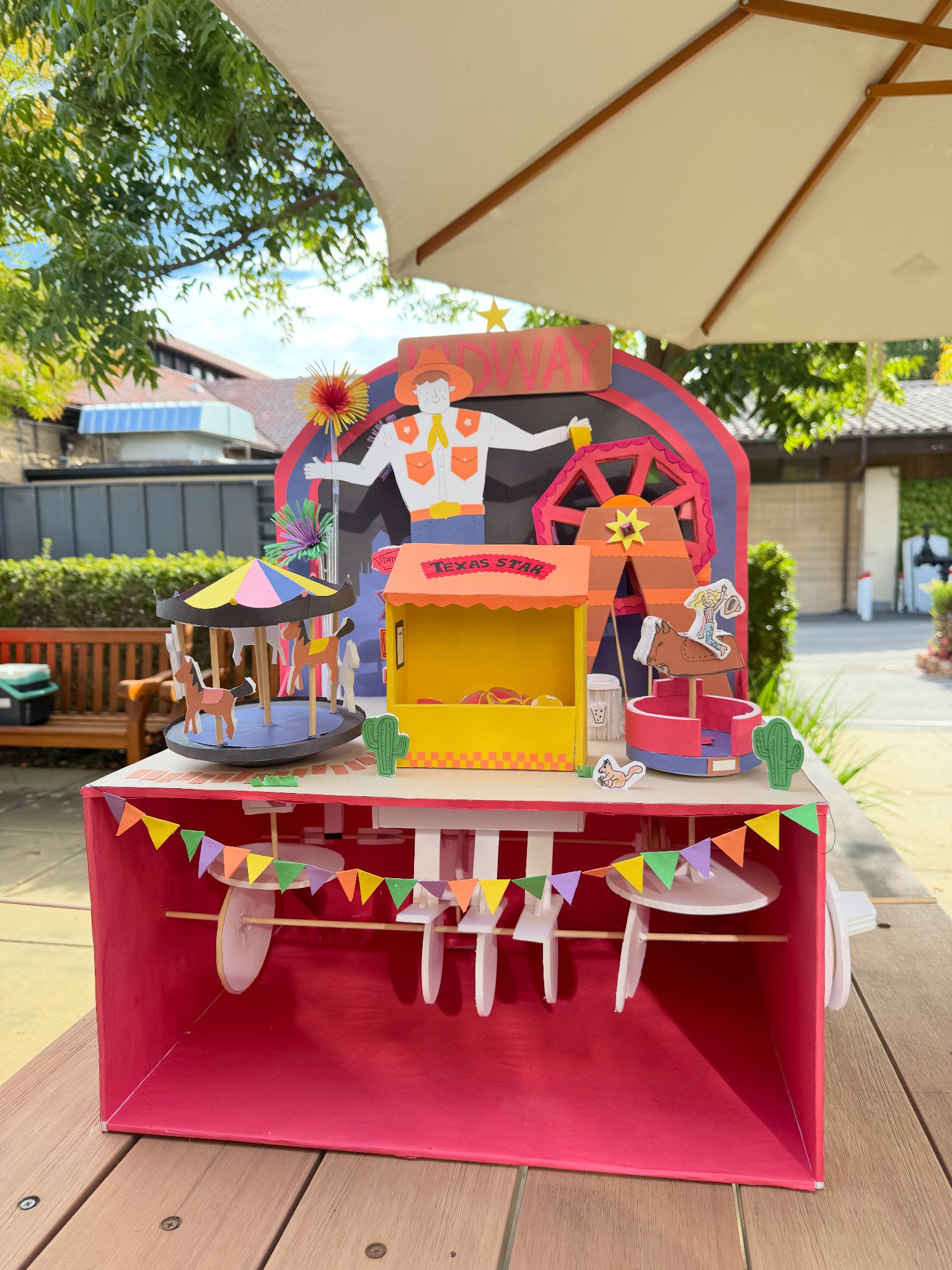
The finished Texas State Fair automaton
Play video
The finished automaton, running on one crank.
Play
Rapid prototype: proving the cam motion before committing.
Play
Mechanism prototype: the linkages under the deck.

A mechanical love letter to home, one crank drives the whole Texas State Fair scene to life through nested cams, linkages, and a lot of foam core.

  • Mechanical design
  • Fabrication
  • Storytelling
Play walkthrough
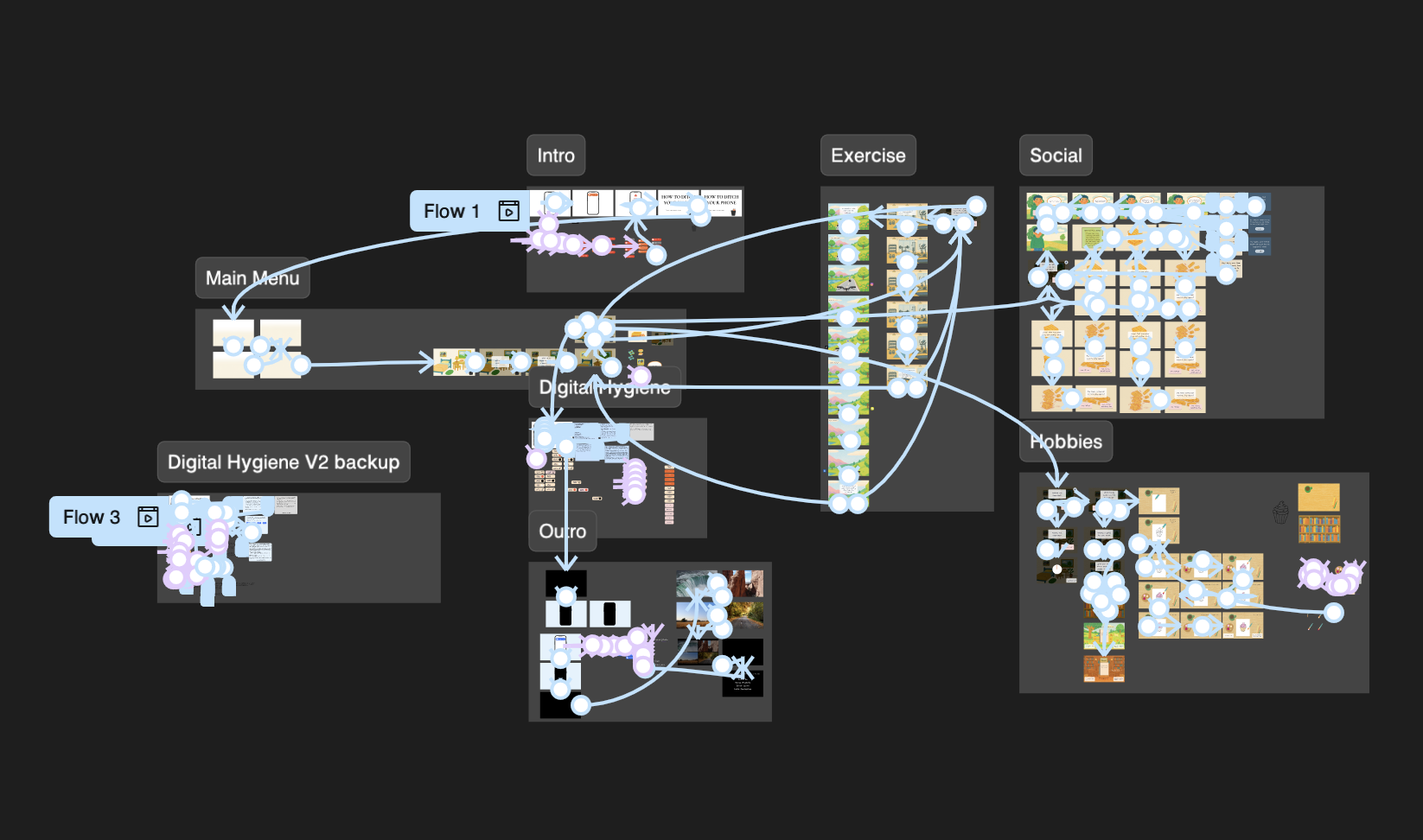
A walkthrough of the lesson: intro, main menu, digital hygiene, and the three topic branches.
Figma prototype flows for How to Ditch Your Phone
The prototype wiring: intro, main menu, digital hygiene, and the three topic branches.
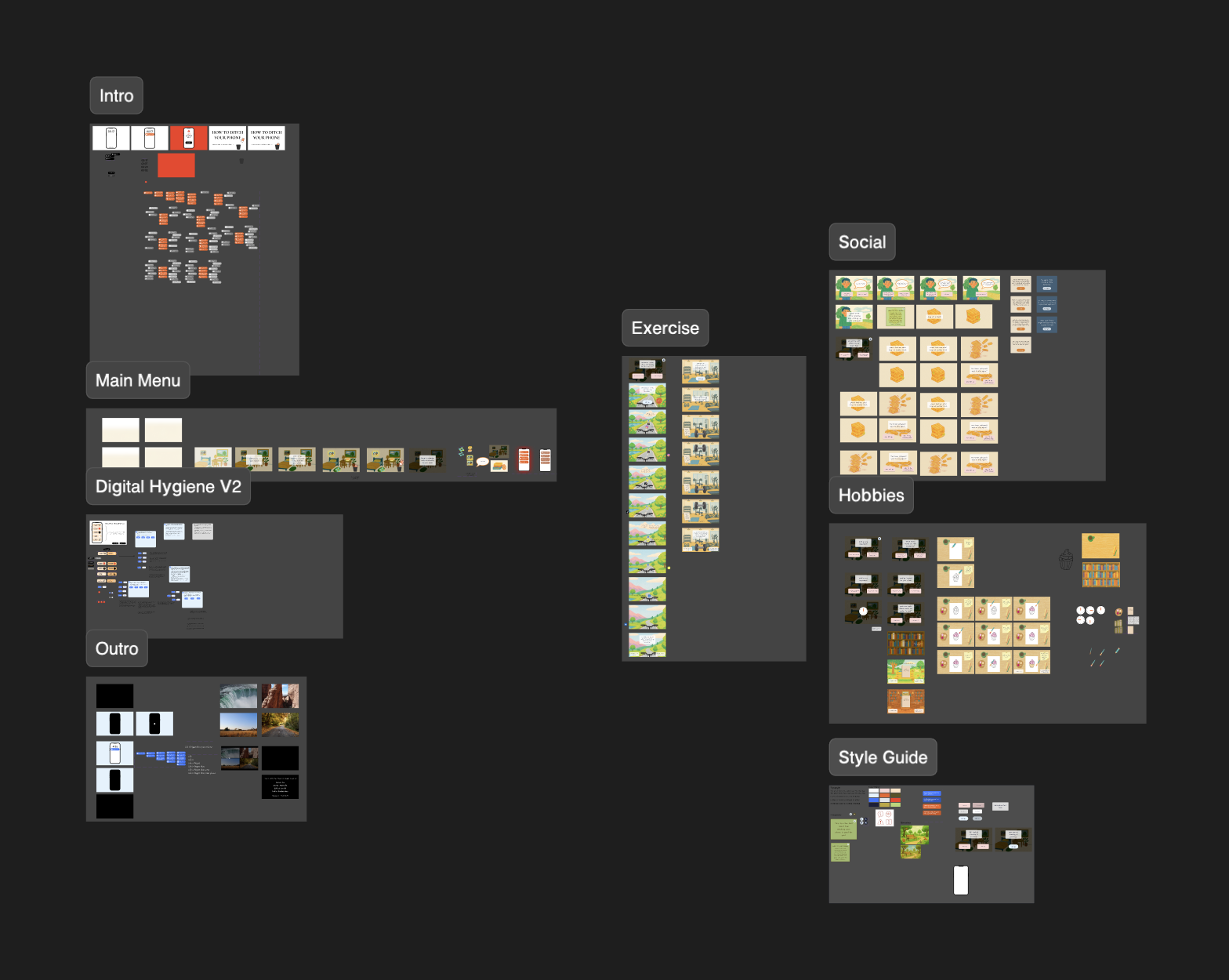
Figma canvas showing every lesson frame and the style guide
Every frame in the lesson, from exercise and social to hobbies and the style guide.

An interactive, self-guided lesson that teaches practical methods for reducing screen time, designed to feel encouraging rather than preachy.

  • Interaction design
  • Figma
  • Behavior change
Play demo
The QuickZip in use: clip it on, grip it, zip yourself up.
Sketchbook, from first solution to final poster
Solution 3: a flat clip with a rubber grip, plus the storyboard of getting stuck in a dress.
Alligator vs. alligator: which clip actually grips a zipper.
Improved prototyping: pros and cons of the gold clip and bracelet chain.
Chain length: bracelet is too short, a necklace chain lets you pull all the way up.
Logos and the poster: clip it, grip it, zip it.

A little product that solves a real annoyance: a zipper pull good-looking enough to leave on, that clips onto ALL zippers rather than only those with a pull hole.

  • Product design
  • Prototyping
  • Everyday objects
Design 1 Introduction to Design
The premise

Twelve minutes, three to four participants, puzzles that only unlock in sequence. Rather than testing content recall, the room measures communication and shared problem solving.

Built from what was around

An unused Bay Studio cart became a stocked beverage cart, leftover cardboard became the electrical box, and the Product Realization Lab 3D-printed the hidden message so it would survive being handled.

What testing changed

In the first run, puzzles got skipped because they were not load-bearing. We resequenced, added a radio assembled from puzzle pieces, a key on the back of a flight attendant badge, and clearer audio cues.

Constraints create collaboration

Requiring participants to stay in their seats until a certain puzzle was solved forced verbal coordination. The electrical box, once it had a real decoding step, was voted the most collaborative puzzle in the debrief.

Designing for collaboration is different from designing individual puzzles. It is really hard to see where improvement is needed without an outsider perspective.

What I took away from three rounds of testing

Read the full DP1 portfolio →

Collaboration is one of the most in-demand skills and almost never assessed in a real setting. So instead of a test, we built an escape room: interconnected puzzles for three to four passengers, prototyped and iterated across three rounds of live testing.

  • Experience design
  • Prototyping
  • Team dynamics
The numbers

Stanford already diverts over 60 percent of its waste, yet 38 percent of what reaches the landfill is compostable, and food scraps alone account for 24 percent. Only 27 percent of landfill waste actually belongs there.

Invisible systems

Students asked what actually happens to compost after it leaves the bin. When the feedback loop is invisible, the behavior starts to feel pointless.

Path of least resistance

Waste behavior follows ease, not intention. Smaller plates and clearly labeled biodegradable cutlery reduced waste more than any awareness campaign did.

Norms ripple

When one student leaves the space 85 percent clean, it reads as 100 percent messy, according to Owen, the Bay Studio facilities manager. Sorting is socially reinforced, in both directions.

The concept

New Student Orientation is the one moment every Stanford student is in the same room. Programming that shows freshmen the afterlife of their waste gives them waste literacy on day one, instead of habits to unlearn later.

See the DP2 expo poster →

Interviews with students and the d.school facilities manager, read against Stanford’s own waste data, kept pointing at the same problem: the system is invisible. Students cannot see where compost goes, so the motivation to sort it correctly quietly disappears.

  • Concept design
  • Research
  • Sustainability
How might we

How might we design an opportunity for international freshmen to connect with upperclassmen, both international and domestic, so that they can receive advice and mentorship?

What we heard

Five interviews, mostly in person at Coupa and CoHo. Sona arrived from Delhi having never set foot on campus. Lara noticed mini-diasporas with no cohesive infrastructure. Jimmy wanted programming that was interactive rather than lecture-style.

Where programs fall short

SIB mentorship through the Bechtel Center rarely survives past the first few weeks, and beyond it there is no structured way to meet older students, international or domestic.

Longer than one meet-up

We explored physical, digital, and experiential directions, filtering for anything that could outlast a single event and serve freshmen and upperclassmen at the same time.

“If I knew people from the start who were Stanford seniors who’d gone through the process themselves, talking to them would have been so helpful.”

An international freshman we interviewed

Read the DP3 final expo presentation →

International students meet most of their grade during ISO, and then the structure disappears. We interviewed five international students, freshmen through a junior, about how they actually found community, and designed for the gap that opens once orientation is over.

  • Service design
  • Research
  • Mentorship